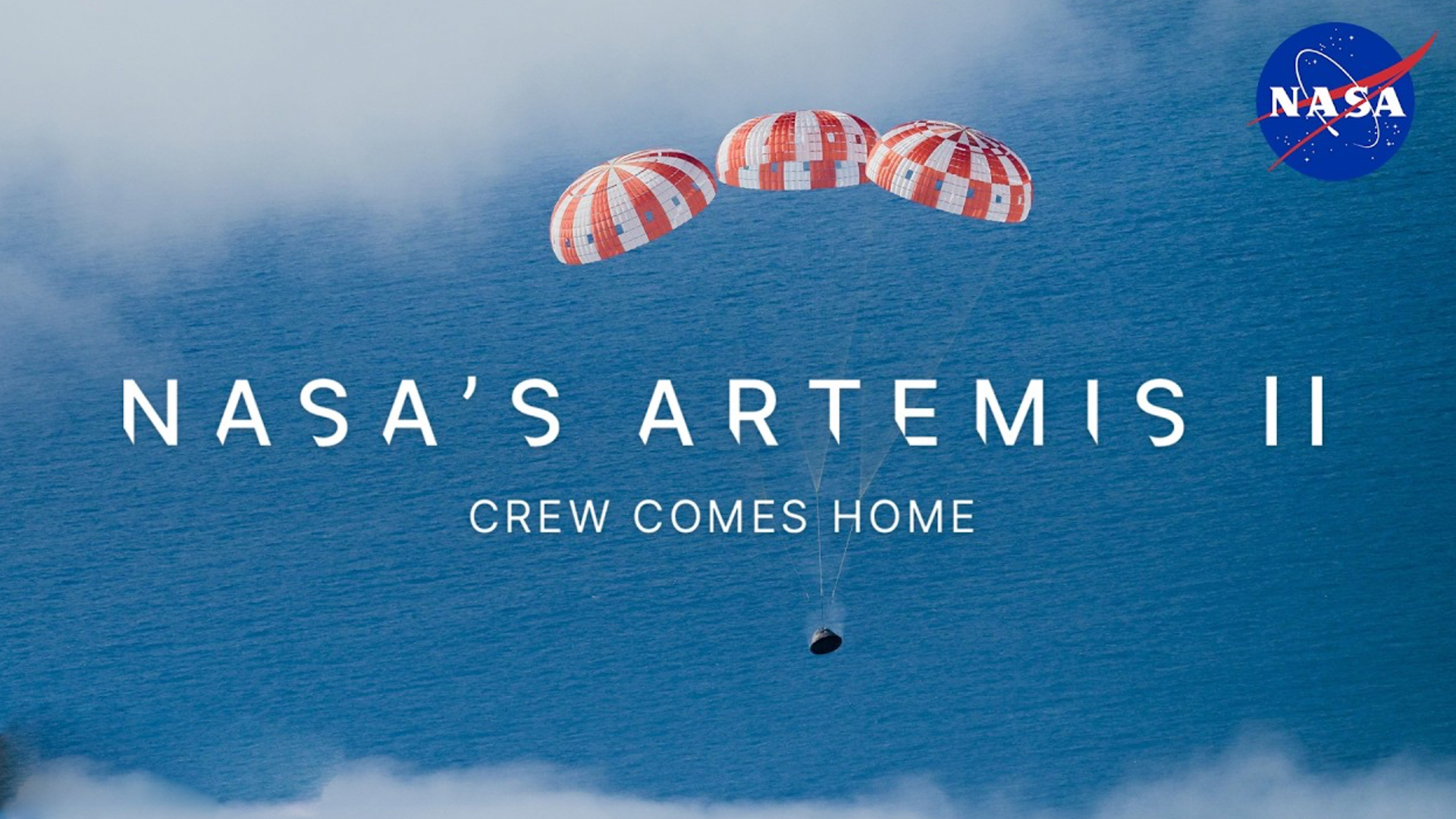
 Image Credit: NASA on YouTube
Artemis II Splashdown: When & How NASA’s Lunar Crew Returns to Earth
After a historic journey around the Moon, the crew of Artemis II is officially headed home—and the final moments of the mission are just as intense as the launch.
Astronauts Reid Wiseman, Victor Glover, Christina Koch, and Jeremy Hansen are expected to splash down in the Pacific Ocean off Southern California at around 8:07 p.m. EDT on Friday, April 10, wrapping up a 10-day, nearly 700,000-miles around the Moon.
Here’s everything you need to know about the dramatic return of Orion spacecraft.
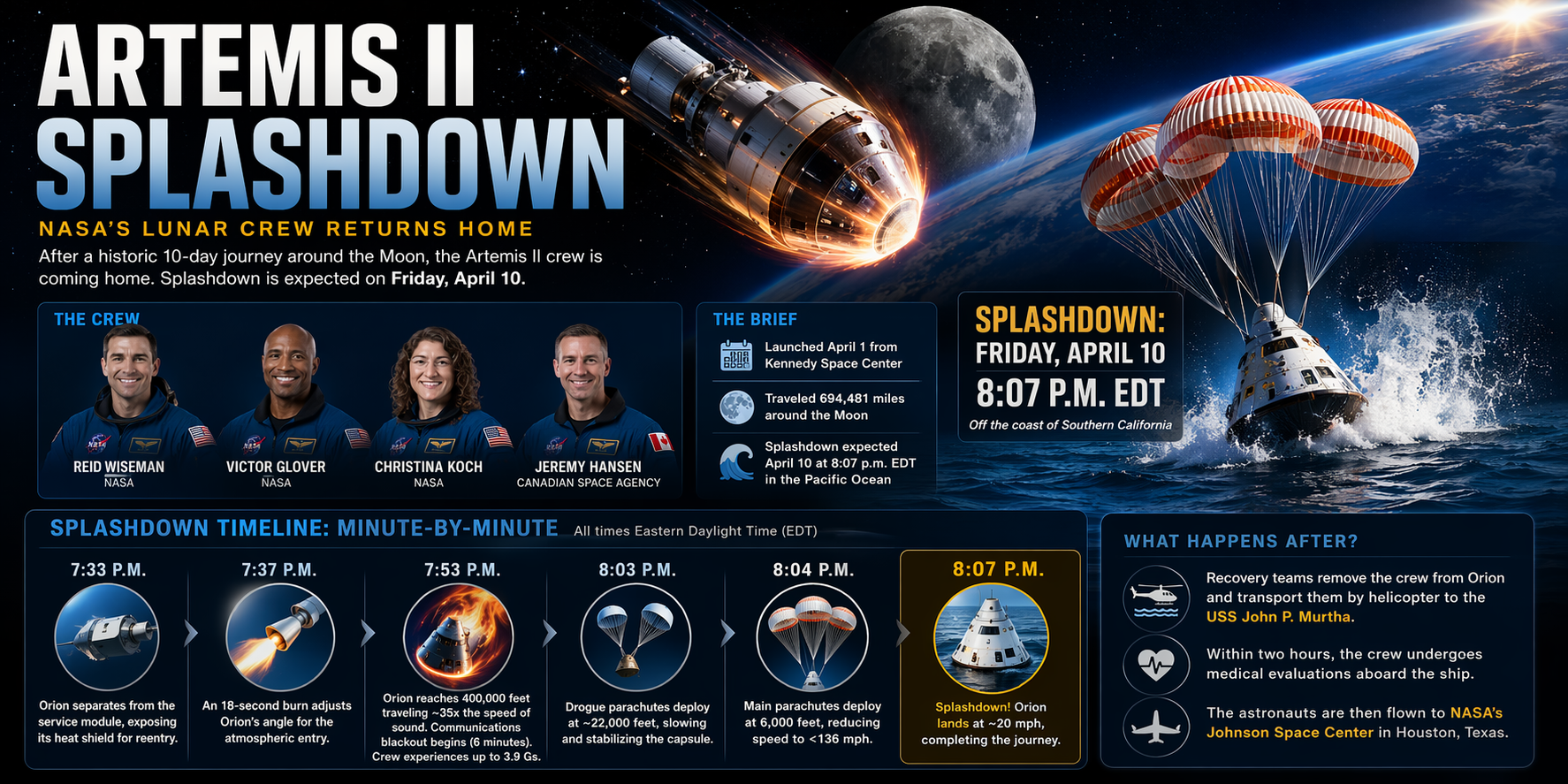
Splashdown Timeline: Minute-by-Minute
The return to Earth is a carefully choreographed sequence—and every second counts:
- 7:33 p.m. – The Orion crew module separates from its service module, exposing its heat shield for the fiery reentry through Earth’s atmosphere, where temperatures soar to nearly 3,000°F.
- 7:37 p.m. – A short engine burn adjusts the capsule’s angle, ensuring the heat shield is perfectly aligned for entry.
- 7:53 p.m. – Orion hits the upper atmosphere at about 400,000 feet, traveling nearly 35 times the speed of sound. The crew experiences intense G-forces (up to 3.9 Gs), and communication drops during a six-minute blackout caused by plasma buildup.
- 8:03 p.m. – Drogue parachutes deploy at about 22,000 feet, stabilizing and slowing the capsule.
- 8:04 p.m. – The main parachutes open at 6,000 feet, dramatically reducing speed.
- 8:07 p.m. – Splashdown. Orion lands in the Pacific at around 20 mph, completing its journey.
What Happens After Splashdown?
Once Orion hits the water, recovery teams from NASA and the U.S. military move in quickly.
- Astronauts are carefully removed from the capsule and placed on an inflatable raft
- Helicopters transport them to the recovery ship, the USS John P. Murtha
- Within about two hours, the crew is safely aboard the ship
From there, it’s all about recovery and evaluation. The astronauts undergo medical checks before being flown back to Johnson Space Center in Houston, Texas.
A Major Step Toward the Moon (and Beyond)
Artemis II marks a huge milestone—it’s NASA’s first crewed mission around the Moon since the Apollo program era. While this mission doesn’t land on the lunar surface, it sets the stage for future missions that will.
Now, all eyes are on the Pacific as this next chapter in human space exploration comes full circle—literally.
Watch NASA explain Artemis II splashdown, from entry to landing:


 Frank
Frank