Image Courtesy of Mattel
Mattel is expanding the Barbie universe once again — this time with the introduction of its first-ever autistic Barbie.
Debuting Monday, the new doll joins Mattel’s growing Barbie Fashionistas line, which is designed to celebrate diversity and inclusion. The collection already features Barbies with Down syndrome, a blind Barbie, dolls with vitiligo, hearing aids, prosthetic limbs, and a wide range of body types, skin tones, and hair textures.
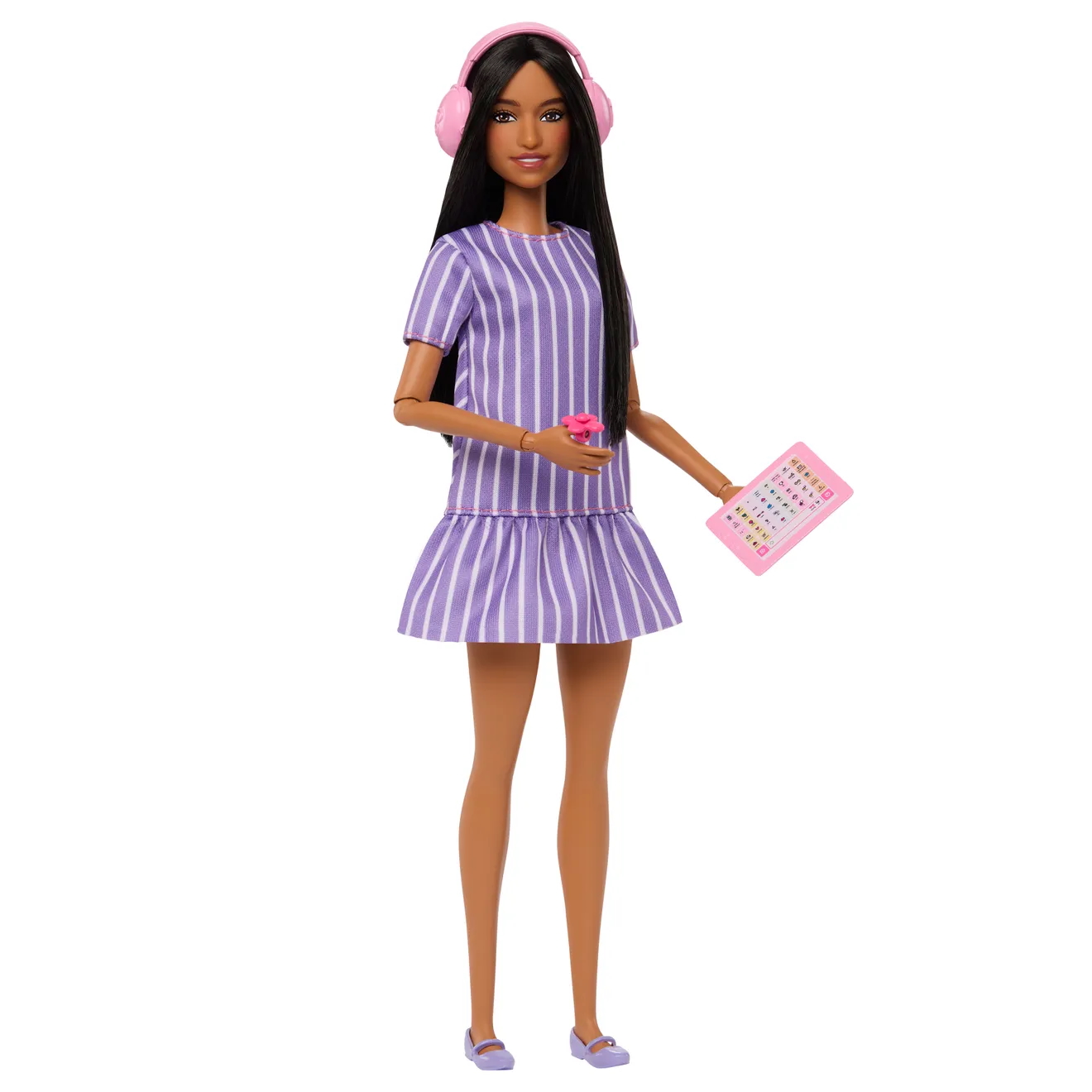 Image Courtesy of Mattel
According to Mattel, the autistic Barbie was developed over the course of more than 18 months in close collaboration with the Autistic Self Advocacy Network (ASAN), a nonprofit organization focused on advancing the rights and authentic representation of autistic people. The goal was to create a doll that thoughtfully reflects some of the ways autistic individuals experience and interact with the world.
That process came with unique challenges. Autism exists on a broad spectrum, with traits that vary widely and are often invisible. “Autism doesn’t look any one way,” said Noor Pervez, ASAN’s community engagement manager, who worked closely with Mattel throughout the design process. “But we can try to show some of the ways that autism expresses itself.”
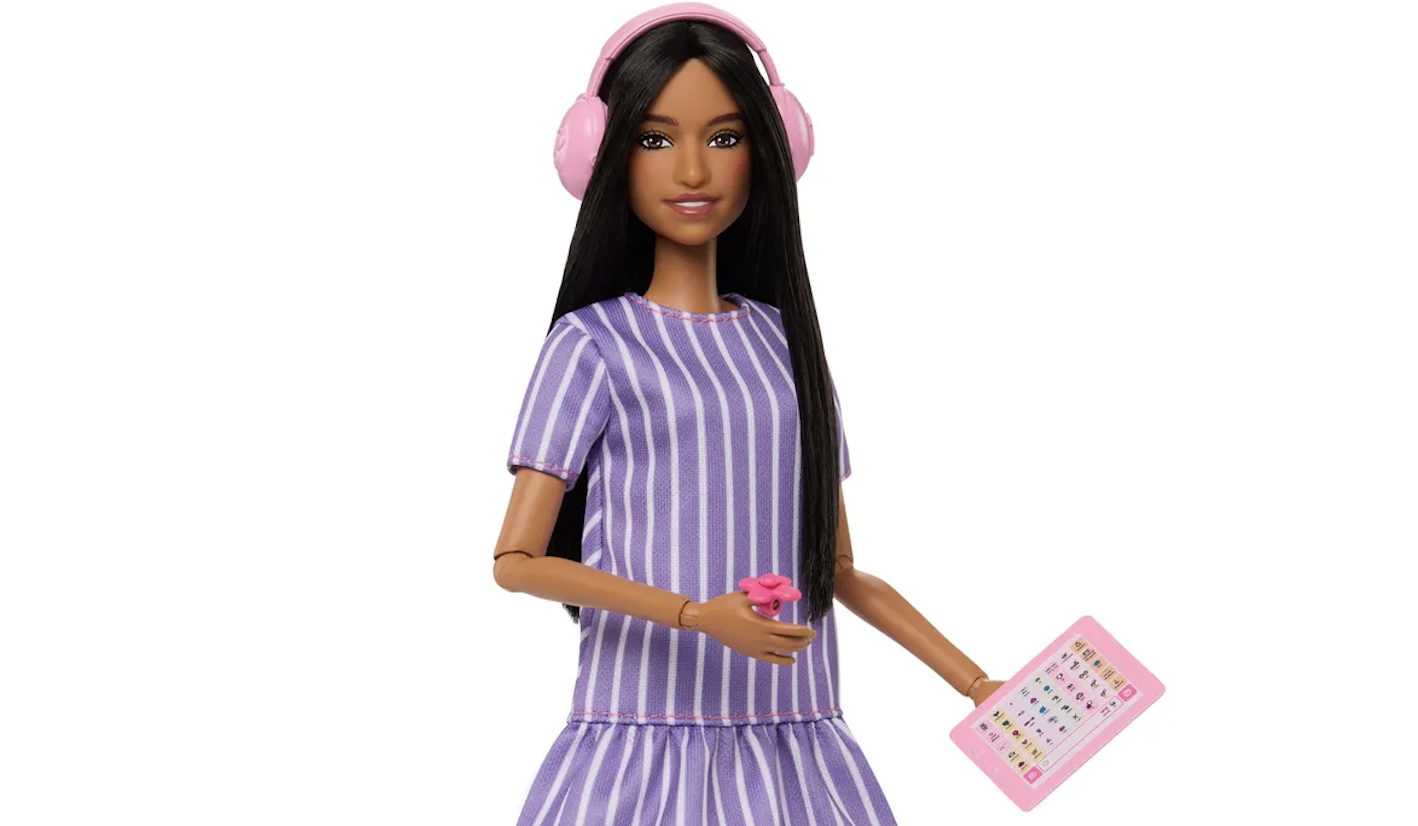
Subtle design details were intentionally included. The doll’s eyes angle slightly to the side, representing how some autistic people may avoid direct eye contact. Articulated elbows and wrists acknowledge stimming behaviors such as hand flapping or repetitive movements, which some individuals use to regulate sensory input or express excitement.
Even the outfit required careful consideration. Designers debated between tight-fitting and loose clothing, as sensory sensitivities vary among autistic people. The final choice was an A-line dress with short sleeves and a flowy skirt to minimize fabric-to-skin contact. Flat shoes were selected to promote comfort, stability, and ease of movement.
Each doll also comes with thoughtful accessories, including a pink finger-clip fidget spinner, noise-canceling headphones, and a pink tablet inspired by communication devices used by some autistic people who are non-speaking or have limited speech.
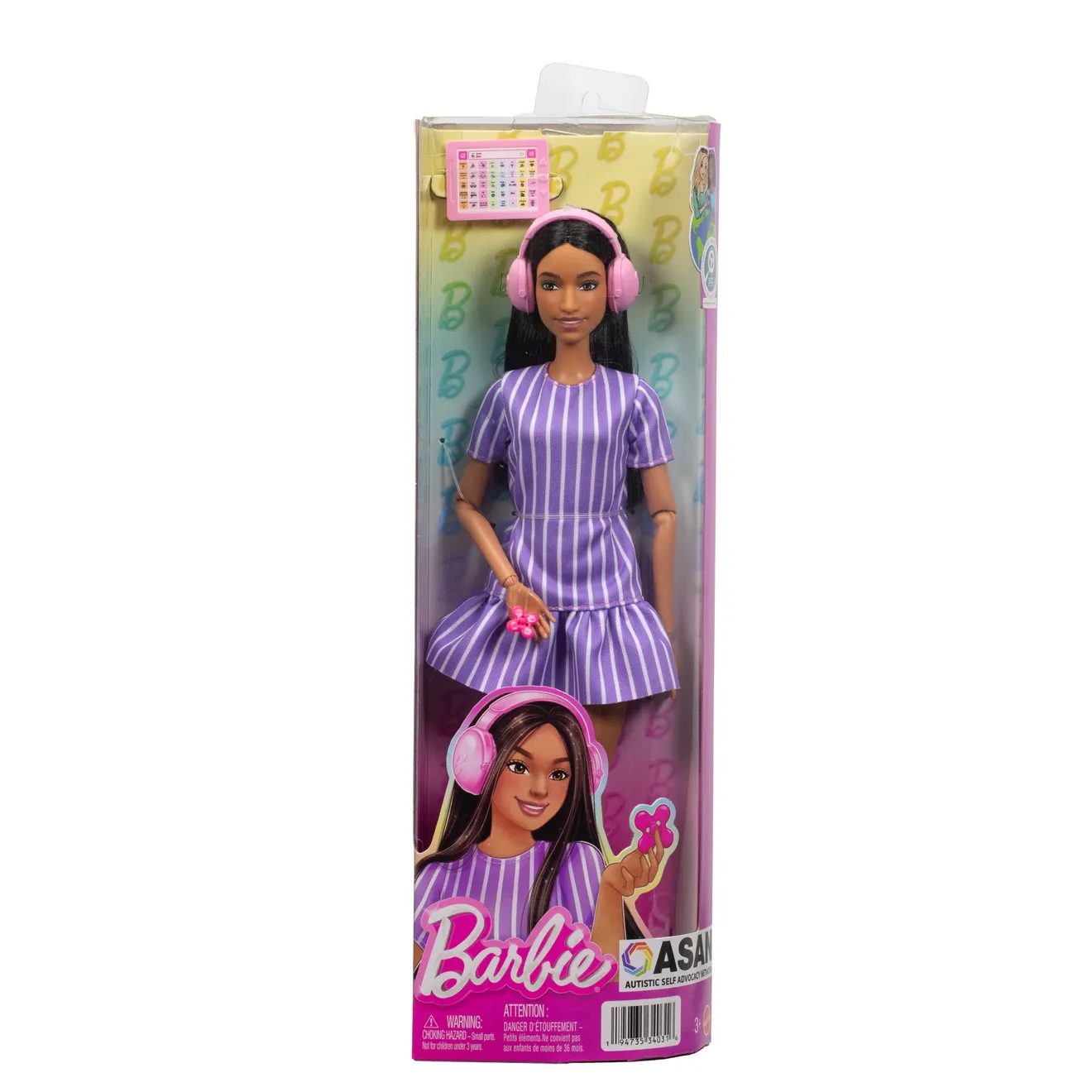 Image Courtesy of Mattel
The release also allowed Mattel to highlight an underrepresented segment of the autistic community. The doll’s facial features were inspired by employees in India, with mood boards reflecting women from diverse Indian backgrounds. Pervez emphasized the importance of inclusive representation across cultures within the autism community.
Mattel has steadily expanded its inclusive offerings in recent years. In 2023, the company launched its first Barbie with Down syndrome, followed by a Barbie representing someone with Type 1 diabetes last summer. The Fashionistas line also includes a Barbie and a Ken with prosthetic legs, a Barbie with hearing aids, and dolls representing tall, petite, and curvy body types.
“Barbie has always strived to reflect the world kids see and the possibilities they imagine,” said Jamie Cygielman, Mattel’s global head of dolls, in a statement. “We’re proud to introduce our first autistic Barbie as part of that ongoing work.”
The autistic Barbie will be available starting Monday at Mattel’s online shop and Target stores for a suggested retail price of $11.87. Walmart is expected to begin carrying the doll in March.
According to the Centers for Disease Control and Prevention, the estimated prevalence of autism among 8-year-old children in the U.S. is 1 in 31. CDC data also shows higher diagnosis rates among Black, Hispanic, Asian, and Pacific Islander children compared to white children, with autism being more than three times as prevalent among boys than girls.
With this latest release, Mattel continues its push toward more inclusive play — offering children dolls that better reflect the diversity of the real world.


 Frank
Frank