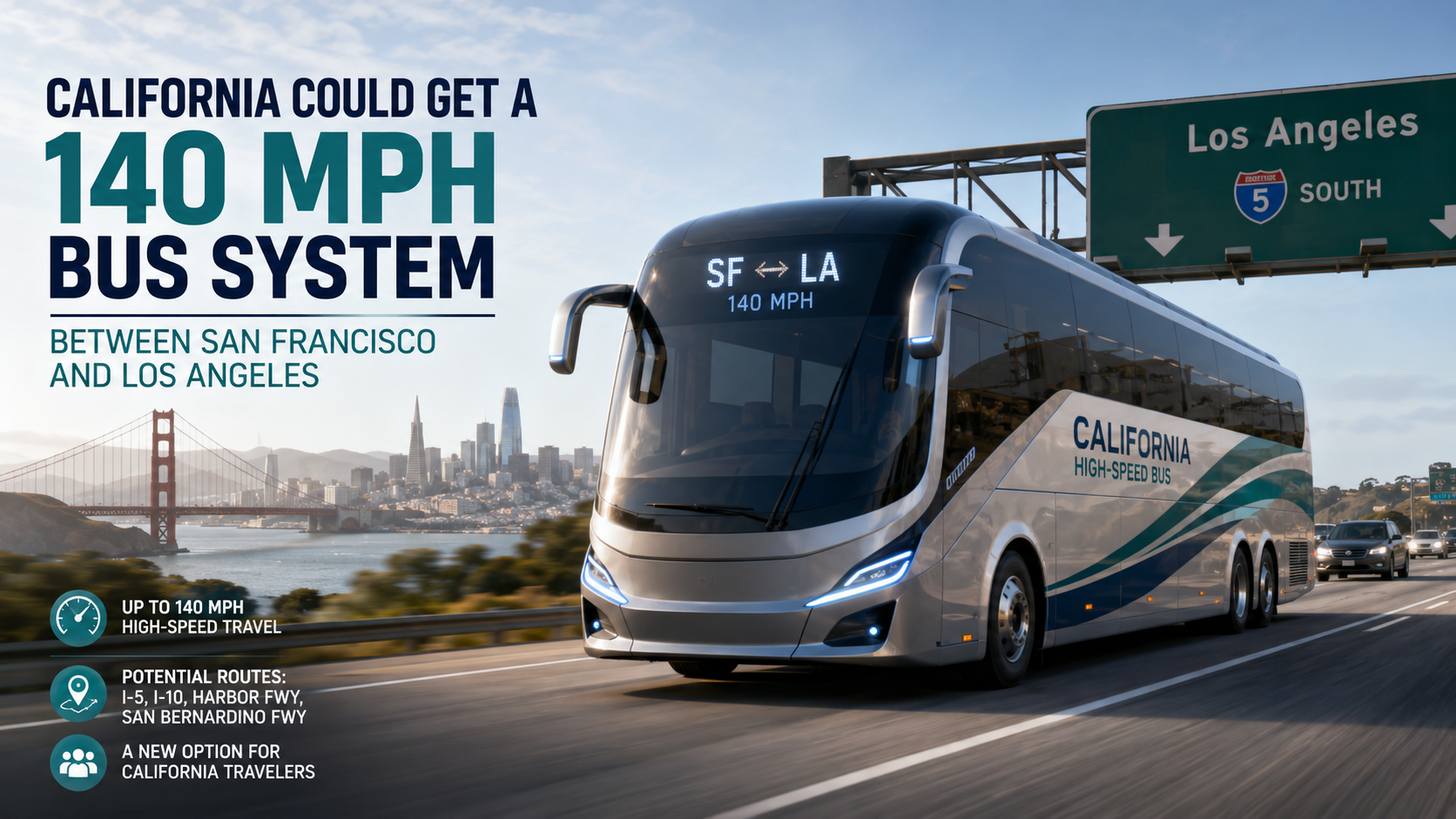
California may be taking another shot at high-speed travel — this time with buses.
The California Department of Transportation, better known as California Department of Transportation, is exploring the possibility of a high-speed bus network capable of traveling up to 140 miles per hour between major cities like San Francisco and Los Angeles.
The idea is still in the early planning stages, but officials say it could become an alternative to flying or driving for Californians who frequently travel between Northern and Southern California.
Caltrans says the concept is part of a broader push to study what it calls “high-speed buses.” Potential routes could include heavily traveled freeways like the Harbor Freeway, the San Bernardino Freeway, Interstate 5, and Interstate 10.
According to Caltrans feasibility studies manager Ryan Snyder, the state may first focus on interregional routes connecting Los Angeles with San Diego, the Bay Area, and Sacramento.
Some Californians are already intrigued by the idea, especially frequent flyers who are tired of dealing with airports.
One Bay Area traveler said a high-speed bus could be a more accessible and convenient option than flying several times a year. Others simply like the idea of another transportation choice that could potentially cut travel time.
Still, transportation experts say there are major hurdles to overcome before the idea could become reality.
One of the biggest concerns is traffic congestion on California’s already packed freeways. Experts say the buses would likely need their own dedicated lanes, and those lanes would have to be newly built rather than converted from existing traffic lanes.
The proposal also arrives while California continues investing billions into the state’s long-debated high-speed rail project. The California High-Speed Rail Authority reports that more than $14 billion has already been spent on the rail system intended to eventually connect San Francisco and Los Angeles.
That history has left some residents cautiously optimistic but skeptical about whether another ambitious transportation project can actually get off the ground.
Caltrans has not released any official cost estimates for the high-speed bus concept. Officials also acknowledged that if 140 mph buses prove too difficult or expensive, a more realistic version operating between 80 and 100 mph could still provide a faster alternative to current travel options.
For now, the project remains a concept, but it’s another sign California is continuing to search for new ways to move people around the state faster — and possibly with fewer airport headaches.
Caltrans issued a statement writing:
"At this time, the concept remains exploratory. Caltrans is currently exploring the feasibility of operating higherspeed buses on California freeways as a potential enhancement to the state's public transportation network. This earlystage assessment is focused on understanding how fast a bus could be safely designed to travel on our freeways, what vehicle and safety design requirements would be necessary and whether any modifications to freeway facilities would support such operations.
Vigorous project analysis and feasibility studies are part of Caltrans' process to determine viability for many concepts and designs intended to improve the transportation network. Caltrans is evaluating what would be required before determining whether future testing or implementation of high-speed busses is appropriate.
The Department's long-term strategic vision accounts for cutting-edge innovation that will transform the transportation landscape and help our goal of improving quality of life for all Californians. With measured analysis, thorough exploration and thoughtful planning, many of these bold concepts will shape the future of a thriving, connected California.
As part of the state's ongoing effort to enhance connectivity and convenience for transit users in California, the state is planning express bus facilities in San Diego and Contra Costa counties, with additional locations expected. "