 Image Credit: MIT on YouTube
MIT Scientists Develop Tiny “Molecular Camera” That Could Detect Bladder Cancer Earlier
A team of researchers at MIT has created a breakthrough sensor that could change the way doctors detect and monitor bladder cancer — one of the most common and expensive cancers to treat in the United States.
Every year, roughly 85,000 Americans are diagnosed with bladder cancer. While many patients respond well to treatment, the cancer has an alarming tendency to return. About half of patients experience tumor recurrence within five years, leading to constant monitoring, repeated procedures, and rising healthcare costs.
Now, MIT researchers say they may have found a way to catch those returning tumors much earlier using a futuristic catheter-based sensor system that acts almost like a “camera for molecules.”
A New Way to Spot Cancer Before It’s Visible
The new technology uses carbon nanotubes — microscopic hollow cylinders made of carbon — that naturally glow under laser light. Scientists coated these nanotubes with specially designed polymers that behave like synthetic antibodies, allowing them to detect specific cancer-related proteins.
For this study, the team focused on a bladder cancer biomarker called NMP-22, a protein already approved by the FDA for bladder cancer screening.
Normally, NMP-22 is detected through urine tests, but there’s a problem: by the time the protein shows up in high enough amounts in urine, tumors may already be more advanced.
MIT’s new approach skips the waiting game.
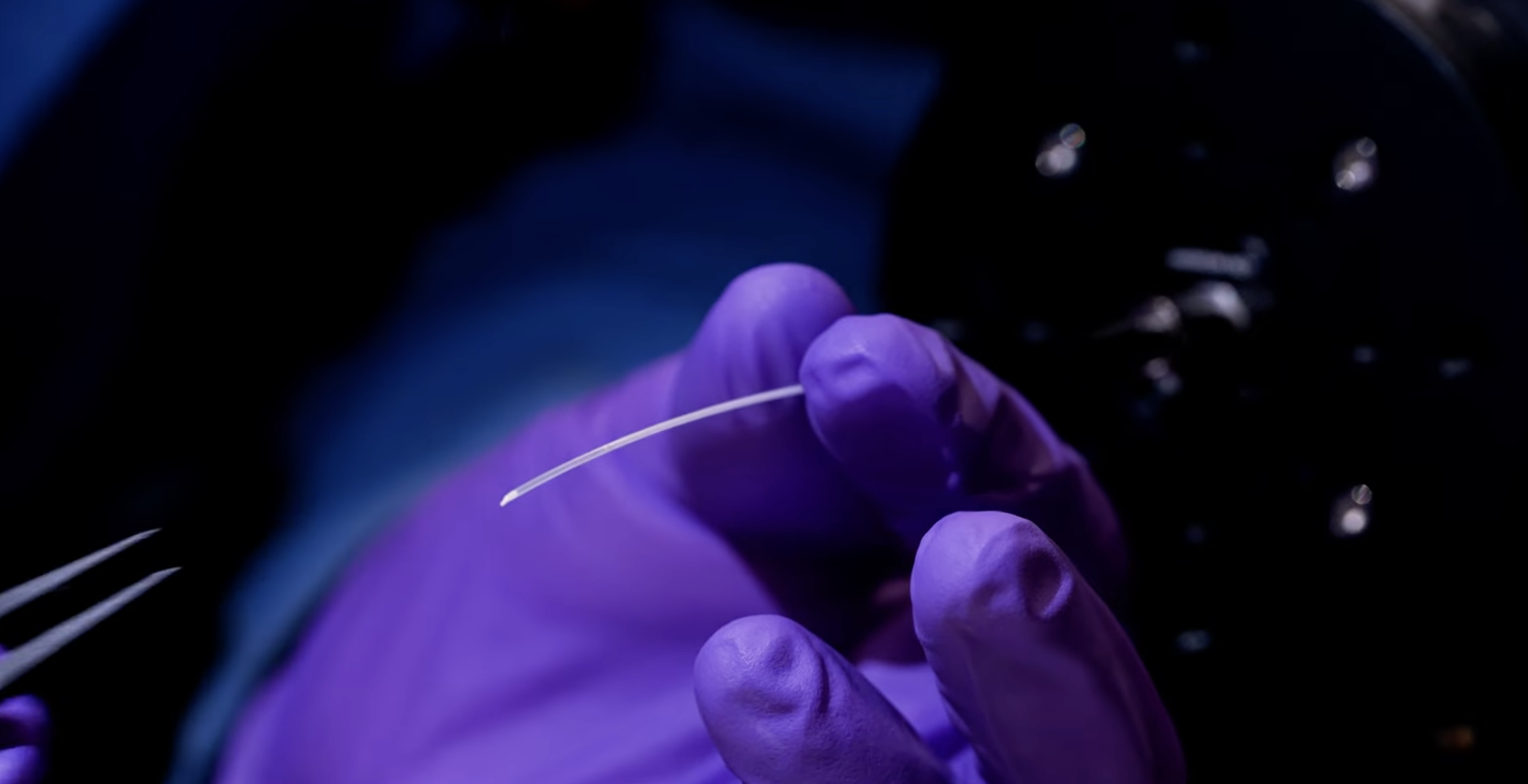
Instead of looking for diluted biomarkers in urine, researchers designed a catheter coated with nanosensors that can detect the protein directly inside the bladder — right where cancer cells are producing it.
The device also includes a tiny rotating ball lens that shines laser light onto the sensors and reads the fluorescent signals they emit. Those signals create what researchers call a “chemical image,” helping doctors identify not only whether cancer is present, but exactly where it’s hiding.
“It’s like a camera for molecules instead of light,” said MIT chemical engineering professor Michael Strano, senior author of the study.
Nearly 50,000 Times More Sensitive
According to the researchers, the sensor system is dramatically more sensitive than traditional urinalysis methods.
In animal testing, the technology proved about 180 times more sensitive because it measures biomarkers directly at their source instead of relying on diluted urine samples. Overall, the researchers estimate the system could be nearly 50,000 times more sensitive than standard urine testing approaches.
That level of precision may allow doctors to detect tumors as small as 16 square millimeters — potentially long before they become visible during routine examinations.
The fluorescent nanosensors essentially create a map of suspicious activity inside the bladder lining, allowing physicians to pinpoint tumors earlier and more accurately.
Making Cancer Monitoring Faster and Less Invasive
Currently, bladder cancer survivors often undergo regular cystoscopy procedures, where doctors insert a camera into the bladder to visually inspect for recurring tumors. These screenings can happen yearly — or even more often for high-risk patients.
The MIT team hopes their technology could eventually make monitoring easier, faster, less invasive, and more affordable.
Researchers are already working on shrinking the prototype so it can fit into existing cystoscopes commonly used in doctors’ offices.
The goal is to identify tumors before they grow large enough to be seen with conventional imaging.
Beyond Bladder Cancer
Scientists say this technology may have applications far beyond bladder cancer.
Because the nanosensors can be customized to detect different molecules, the same system could potentially be adapted to identify other cancers or diseases involving hard-to-see biomarkers.
Researchers believe the technology could someday assist in detecting gastrointestinal disorders, cardiovascular disease, and other conditions through endoscopic procedures.
“The beauty of polymer chemistry is that we can develop new sensors tailored to different diseases,” said MIT researcher Wonjun Yim.
The study was published in the journal Nature Nanotechnology and funded by organizations including the Koch Institute, Dana-Farber/Harvard Cancer Center, the National Science Foundation, and Schmidt Science.