Almost 1 in 3 People Admit They Just Cut the Mold Off Their Food and Eat It Anyway
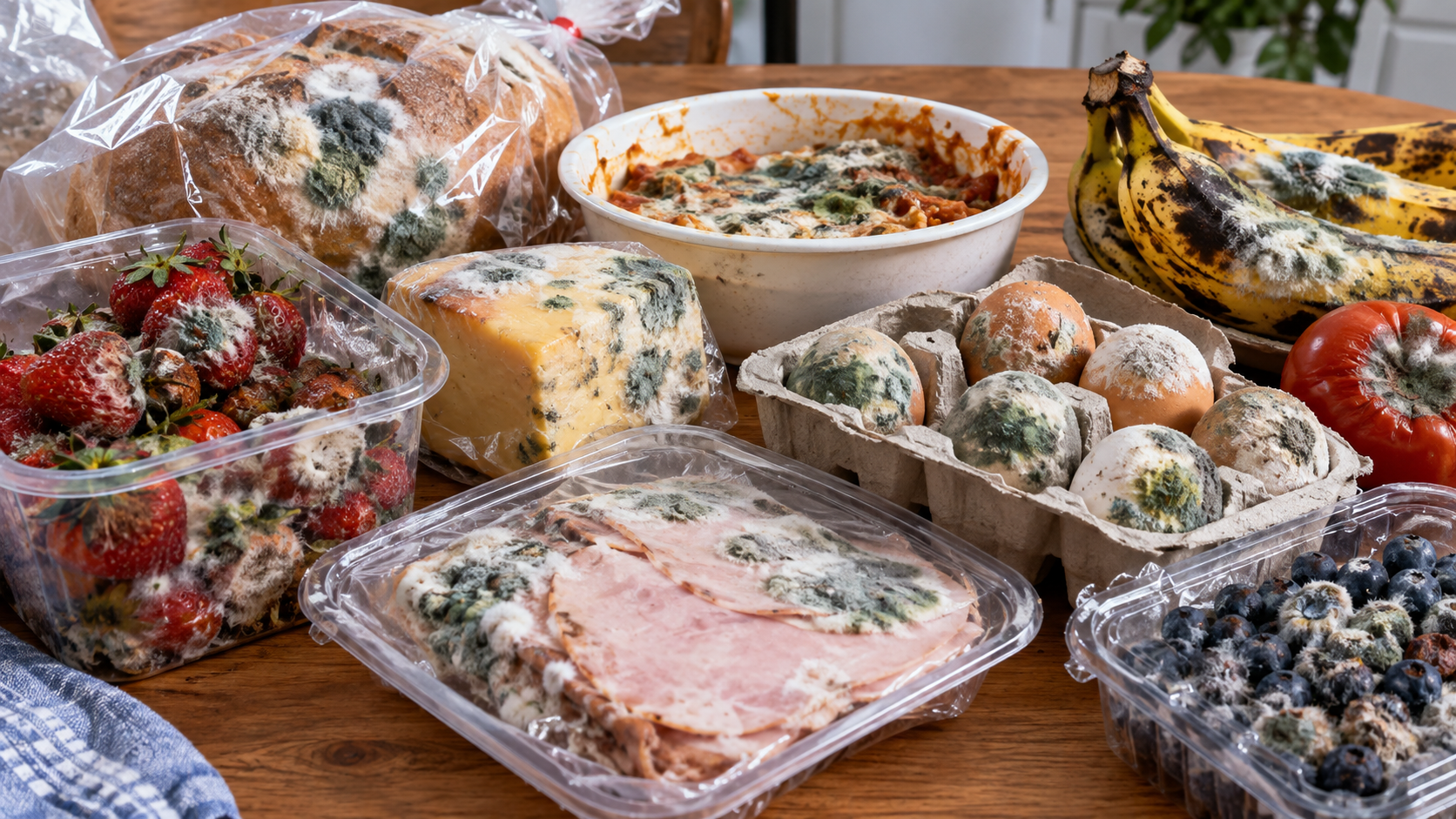
Be honest: When you see a little mold on your food, do you throw the whole thing away… or grab a knife and start performing food surgery?
With grocery prices in 2026, tossing an entire container of strawberries because one berry looks like it has grown a tiny fur coat can feel financially irresponsible.
And apparently, we're not alone.
A new survey found that nearly 1 in 3 people say they simply cut the moldy part off fruits and vegetables and eat the rest.
But here's the problem: sometimes that works, and sometimes you're basically playing Russian roulette with your leftovers.
That Little Fuzzy Spot Could Be Just the Beginning
Researchers surveyed 1,000 people about mold and mycotoxins — toxins that can be produced by certain molds.
The results found that nearly 79% of people rarely or never think about mycotoxins in their daily lives.
Which makes sense. Most of us aren't sitting at work thinking, "I wonder how much Penicillium is growing on my lunch?"
But here's the part that might make you reconsider your food-saving strategy:
More than half of the people surveyed didn't know that cooking or baking doesn't necessarily destroy mycotoxins after they've formed.
So if your plan is to simply throw the questionable food into a 400-degree oven and hope for the best… that's not exactly a food-safety strategy.
When You CAN Cut the Mold Off
Not everything with a tiny spot of mold needs to be sent straight to the garbage.
Some dense fruits and vegetables, including cabbage, bell peppers and carrots, can generally be saved.
The USDA recommends cutting away at least 1 inch around and below the moldy area.
And here's an important detail: Don't let your knife touch the mold and then drag it through the good stuff.
Basically, you're performing surgery. Keep the scalpel clean.
Hard cheeses can also usually be saved by cutting at least an inch around and below the mold. Afterward, wrap the remaining cheese in fresh packaging.
And then there are foods where mold is actually part of the recipe.
Blue cheeses such as Roquefort, Gorgonzola and Stilton are intentionally made with specific molds. Brie and Camembert also get their characteristic white mold from the cheesemaking process.
Some dry-cured hard salamis can also have a thin white mold coating that's considered normal.
So don't look at a piece of blue cheese and yell, "WE HAVE A SITUATION!"
When You Should Just Throw It Away
Here's where things get ugly.
If the food is soft, moist or porous, cutting off the visible mold usually isn't enough.
That includes:
- Soft fruits and vegetables
- Bread
- Baked goods
- Yogurt
- Sour cream
- Soft cheese
- Shredded, sliced or crumbled cheese
- Peanut butter
- Nuts and legumes
Why?
Because mold can spread beneath the surface where you can't see it.
So when your peach has a fuzzy spot, don't just cut off the fuzzy spot and declare victory.
The mold may have already moved into the neighborhood.
And Don't Mess Around With Moldy Home-Canned Food
If you discover mold growing inside a home-canned food, the recommendation is simple:
Throw it away.
Don't scrape off the top of Grandma's homemade jam and convince yourself the bottom is fine.
Mold in canned food can be a sign of a bigger problem, such as a broken seal or improper processing.
Grandma will understand.
Probably.
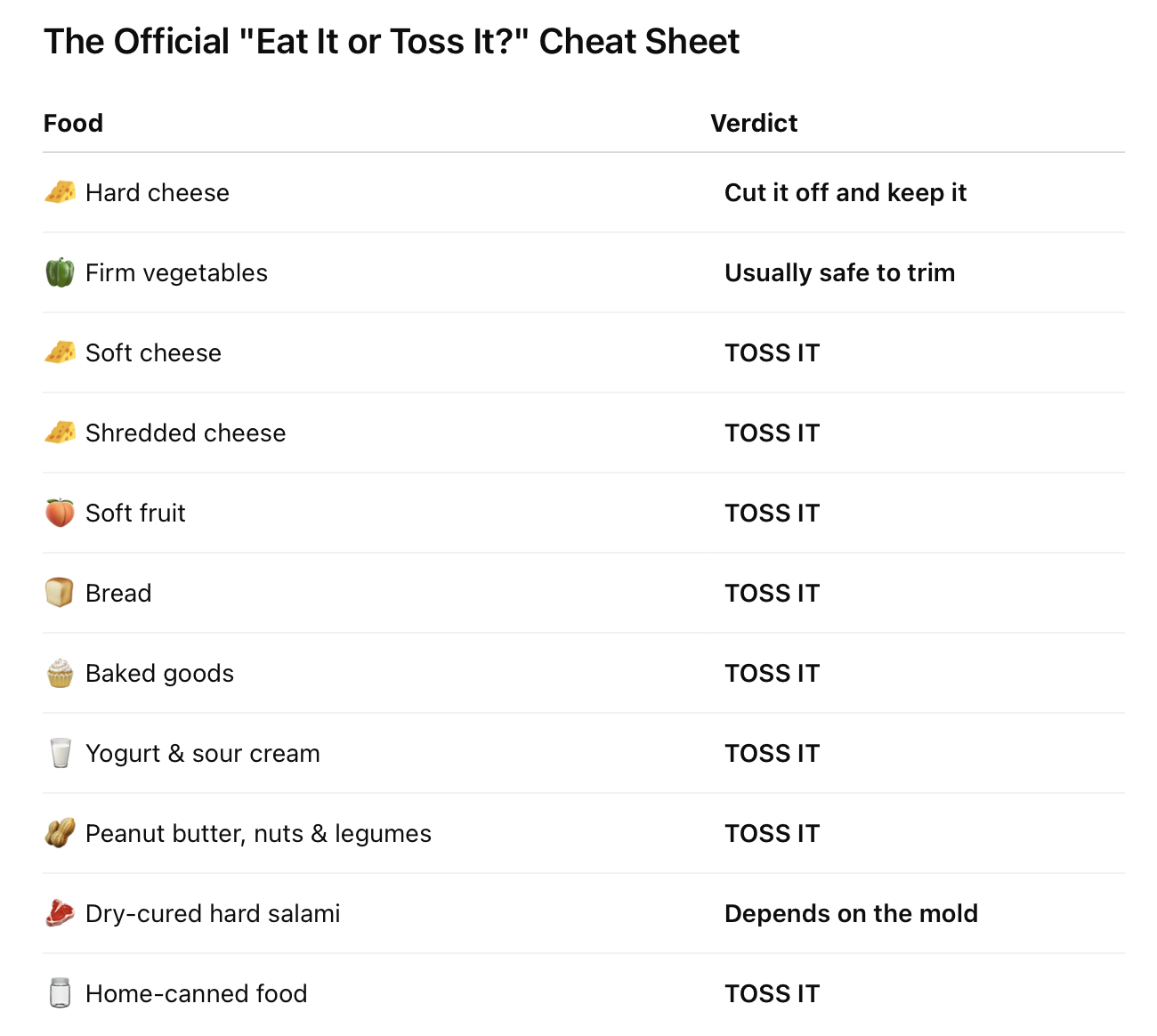
The Official "Eat It or Toss It?" Cheat Sheet
How to Keep Your Food From Growing Its Own Civilization
The best way to deal with mold is to prevent it from showing up in the first place.
Keep perishable foods refrigerated and don't leave them sitting out for more than two hours.
You should also:
- Eat leftovers within 3–4 days
- Move opened canned foods into clean containers
- Keep your refrigerator clean
- Wash or replace moldy-smelling sponges and dishcloths
- Keep household humidity below about 40% when possible
Basically, your refrigerator should be a food-storage appliance — not a science experiment.
So… Should You Cut It or Toss It?
The answer is: It depends.
A little mold on a hard cheese or dense vegetable doesn't necessarily mean the entire thing is doomed.
But mold on bread, soft fruit, yogurt or soft cheese?
Don't be a hero. Throw it away.
Saving $2 worth of strawberries isn't worth spending the rest of the day wondering if that weird stomachache was lunch or your latest encounter with the mold kingdom.
When in doubt, toss it out. Your stomach will thank you.